By Colin Foster
Updated November 2026
Very small closet organization comes down to three things: clearing out what you don’t use, measuring the space accurately, and then using the height and door area you’re probably ignoring. Work through the steps below and you’ll end up with a closet where everything has a home, you can see what you own, and you can get dressed without digging. Most tiny closets can gain a surprising amount of usable space without any construction.
Step 1: Measure the Closet Before You Buy Anything
Buying storage before you measure is the most common way small closets end up cluttered again. Take a few minutes with a tape measure and write down the numbers.
Shopping for one? See our guide: 3 Best Small Linen Closet Organization Bins for Tight Spaces (2026).
- Width of the closet at the rod and at the floor (walls are often not perfectly parallel)
- Depth from the back wall to the door frame
- Height from the floor to the ceiling, and the height of any existing shelf
- Distance from the top of the door to the ceiling, which tells you whether an over-door rack will fit
- Rod height and whether the rod can be moved
Once you have these numbers, sketch a rough plan on paper. A 24-inch-deep closet can usually hold a standard hanging rod with shelving above it, but a 12-inch-deep reach-in may only work with a single rod and a narrow shelf.
Step 2: Empty and Sort Everything
Take everything out. It feels like extra work, but you can’t judge what fits until you can see every item at once. Put everything on a bed or the floor and sort it into four piles:
- Keep and use: worn in the last year or clearly needed
- Donate or sell: still good but not something you reach for
- Repair or alter: items you’ll wear again once fixed, with a deadline to deal with them
- Discard: stained, stretched, damaged or outdated
Be honest about the donate pile. A useful rule is that if you haven’t worn something in a year and it doesn’t have a specific occasion attached, it probably doesn’t need to stay in a small closet.
Step 3: Group Like Items Together
Before you put anything back, decide on categories and keep each one in a single zone. In a small closet, grouping matters more than in a big one because you have fewer places to hide things.
Common categories for a small closet
- Long items: dresses, coats, long shirts
- Short hanging items: shirts, blouses, pants on hangers
- Folded knits: sweaters, sweatshirts
- Shoes and bags
- Accessories: belts, scarves, jewelry
- Off-season or occasional items
Off-season clothes are the first thing to move out if space is tight. Store them in labeled bins on a high shelf, or in a storage bag somewhere else in the home. If you’re organizing a closet that serves multiple people, consider a dedicated approach, like the ones covered in Small Closet Clothes Organization: 7 Steps to Fit More in Less Space.
Step 4: Use Vertical Space First
In a very small closet, the walls above the rod are usually the biggest source of unused room. Most closets have 80 inches or more of usable height, but the rod often sits around 66 to 72 inches off the floor, leaving the top third empty.
Ways to use the height
- Add a shelf above the rod. If there’s room, a single shelf 12 inches above the rod gives you a place for folded items and bins.
- Use stacking shelves on the floor. Two-tier shelf units let you stack sweaters or shoes without losing floor space.
- Install a second, lower rod. A short rod under the main one doubles hanging space for shirts and blouses. It works well for kids’ clothes or shorter garments.
- Hang an over-door organizer. The back of the door is often unused. Shoe pockets, hook racks and small-item pockets can hold a surprising amount.
For more layout ideas that build on this, see Very Small Closet Organization Ideas: 8 Layouts That Add Real Space.
Step 5: Choose the Right Hangers and Hooks
Hangers affect how much fits on a rod more than most people expect. Bulky plastic or wooden hangers can take up two or three times the width of thin slim-profile ones, so switching hangers alone can free up a meaningful amount of rod space.
- Use slim, non-slip hangers for shirts and blouses so they don’t slide off.
- Use matching hangers for pants and skirts, ideally with clips or bars, so you can hang more than one item per hanger.
- Put a row of small hooks on the back of the door or side wall for bags, belts and robes.
Matching hangers also make the closet look more orderly, which helps you keep it that way.
Step 6: Contain Small Items
Small loose items are where tiny closets fall apart. Socks, underwear, phone chargers and hair tools spread across shelves quickly. Use open bins or drawer dividers so each category has a clear boundary.
| Item type | Container that works | Placement |
|---|---|---|
| Socks and underwear | Fabric bins or drawer dividers | Top shelf or drawer |
| Folded knits | Shallow bins, stacked | Shelf above rod |
| Accessories | Small hanging pocket organizer | Back of door |
| Shoes | Stackable shelves or over-door pockets | Floor or door |
| Off-season items | Labeled lidded bins | High shelf or elsewhere in home |
Use bins that are no deeper than the shelf they sit on. Deep bins on a shallow shelf get packed to the top and become impossible to search.
Step 7: Maintain the System
A small closet works only if you keep it working. Set up a simple routine so the space doesn’t slide back into clutter.
- When you buy something new, remove something old from the same category.
- Once a season, pull out the off-season bins and check what you actually used.
- Keep a laundry basket or hamper outside the closet so dirty clothes don’t end up on the floor.
- Spend five minutes every few weeks straightening shelves and returning items to their zones.
Common Mistakes to Avoid
- Buying organizers before decluttering. Bins and shelves fill up fast when they hold items you don’t need.
- Ignoring the door. The back of the door is one of the most useful and most overlooked surfaces.
- Stacking too high. Anything above shoulder height in a small closet is hard to reach and often forgotten.
- Using deep bins on shallow shelves. Items get lost at the back.
- Keeping every hanger. Mismatched bulky hangers waste rod space that could hold several more shirts.
- Leaving no empty space. A small buffer keeps the closet functional when you bring something new home.
Tips for Making the Most of Tight Space
- Store the items you use most at eye level and reach height, and move rarely used items to the top or bottom.
- Use a single color or material for bins and hangers to make the closet look calmer and bigger.
- If the closet is shared, give each person a defined section with a clear boundary, such as a rod or shelf.
- Consider a shoe rack that holds pairs upright rather than laying them flat, which roughly doubles capacity on a given shelf.
Recommended gear
These are general product types that help with small closets. Compare dimensions to your measurements from Step 1 before you buy.
- Slim non-slip hangers: Thin profiles let more shirts fit on one rod. View on Amazon
- Over-door shoe organizer: Uses the back of the door for shoes or accessories without taking floor space. View on Amazon
- Fabric storage bins with handles: Lightweight bins that sit neatly on shelves and can be pulled out easily. View on Amazon
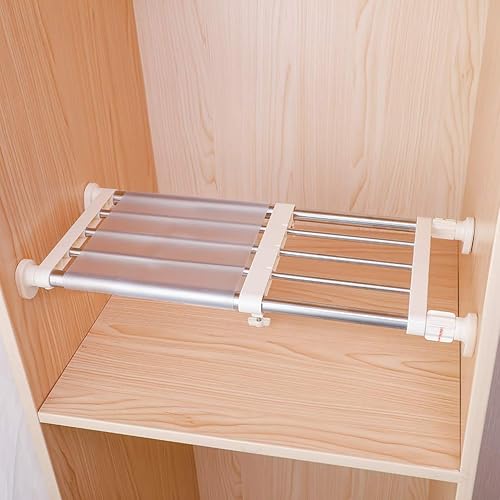
- Adjustable closet shelf and rod kit: Lets you add a second rod or a shelf above the existing rod. View on Amazon
FAQ
How much can I realistically fit into a very small closet?
It depends on the depth and height. A closet with a single rod and one shelf can hold a few dozen hanging items and a modest number of folded pieces. Adding a second rod or shelf above the rod usually increases capacity noticeably without changing the footprint.
Should I use a closet system or individual pieces?
A modular system is easier to adjust if your needs change, while individual pieces can be cheaper to start with and easier to fit around odd-shaped walls. Measure first, then decide which option suits the closet’s shape.
What is the best way to organize shoes in a small closet?
Store shoes on the floor in a tiered shelf or on the back of the door. Keep daily shoes in front and seasonal or rarely worn pairs on a higher shelf or in a bin.
How often should I declutter a small closet?
Doing a full review once or twice a year works for most people, with quick checks each season as you swap clothes. The goal is to keep the closet from filling beyond what it can comfortably hold.
Can I use a closet organizer if I rent my home?
Many organizers install without drilling, such as over-door racks, tension rods and freestanding shelves. Check your lease before making any changes to walls or fixtures, and ask your landlord if you’re unsure.
What if my closet is too small for a second rod?
A short rod mounted under the main one can still work if it has at least a few inches of clearance. If not, focus on folded storage, door organizers and shelves that use the height above the rod.
Is it worth paying a professional organizer for a small closet?
For a single closet, many people manage on their own by following the steps above. A professional organizer can help if you have strong attachment to items, a large backlog of belongings, or a shared space that’s hard to divide. Consult a qualified professional organizer if you want hands-on help.
Conclusion
Very small closet organization works best when you measure first, remove what you don’t use, and then build around the height and door space. Group items by category, use slim hangers and containers that match your shelves, and keep a simple routine to maintain the setup. With these steps, even a narrow reach-in can hold everything you need and stay easy to use.
Related reading
Ready to choose one?
About Colin Foster
Colin Foster is part of our editorial team and reviews and edits our home organization guides, checking product details against manufacturer specifications and owner feedback.