By Colin Foster
Updated November 2026
Closet laundry room organization comes down to giving every item a fixed home and making the most of vertical space. In this guide you will sort what lives in the closet, set up zones for supplies and clean clothes, and add shelving and hooks that keep the floor clear. The whole process takes one afternoon if you work in order. For a deeper look, Top 7 Laundry Room Closet Organization Ideas for Small Spaces (2026) covers this in detail.
Step 1: Empty the Closet and Sort by Use
Pull everything out before you decide where anything goes. Group items into four piles: detergents and cleaners, drying and ironing tools, clean linens and towels, and things that do not belong in a laundry space at all. Anything in the last pile should go back to its real room or out the door.
Shopping for one? See our guide: 4 Best Cloth Cube Storage Bins for Closets and Kids' Rooms (2026).
Step 2: Plan Zones Within the Closet
Divide the space into three zones based on how often you reach for each item. Put daily-use supplies such as detergent, dryer sheets and stain remover at roughly eye level. Store backup supplies on the top shelf or the floor. Keep the middle zone for things you touch weekly, like the iron and laundry bags.
Step 3: Add Shelving and Vertical Storage
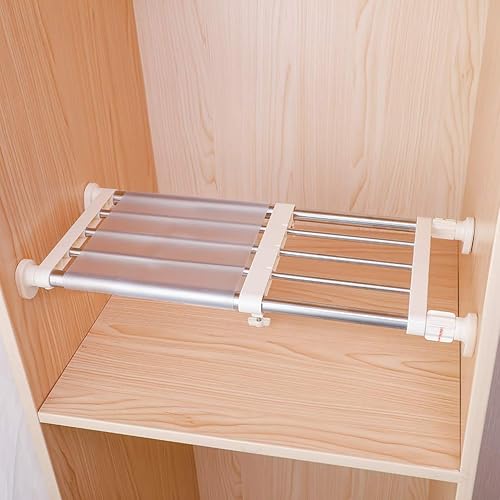
Most closets lose space because the shelf sits too high or too low for the items on it. Measure the height between shelves so bottles fit without tipping. A shelf depth of about 12 inches works for most detergent and cleaning products, and 16 inches gives room for laundry baskets. Over-door racks and tension rods add storage without drilling into walls. For another angle, check out Linen Closet Organization Shelves: A Step-by-Step Guide to a Tidy Setup.
Use Bins and Baskets for Loose Items
Dryer balls, clothespins, lint rollers and spot treatments tend to scatter. Clear bins labeled by category keep them contained and let you see what is running low. Choose bins that slide in and out easily so you are not pulling the whole stack down to reach one item.
Step 4: Set Up a Hanging Area
If you air-dry or hang delicates, reserve a section of the closet for a drying rod or a few wall-mounted hooks. Keep it at least 18 inches from the back wall so clothing does not press against it. Hanging a fold-down rack on the door can work well in narrow closets.
Step 5: Store Clean Laundry Where It Belongs
Use a labeled basket for each household member’s clean clothes if the closet doubles as a folding station. Keep folded towels and sheets on a shelf away from detergent bottles, since spills and humidity can damage linens. Store the laundry hamper outside the closet so it does not fill the floor space.
Common Mistakes to Avoid
- Storing bleach or harsh cleaners on low shelves where children or pets can reach them.
- Stacking heavy detergent jugs on high shelves, which makes them hard to lift safely.
- Filling every inch so there is no room to pull items out.
- Keeping expired supplies because they are hard to see. Check dates once a season.
- Skipping labels, which makes it easy to put items back in the wrong spot.
Recommended Gear
- Over-door laundry hamper rack: Frees floor space by holding a hamper or sorting bags off the ground. View on Amazon
- Clear stackable storage bins: Keep small items visible and easy to grab. View on Amazon
- Tension rod for closet: Adds a hanging point without drilling, useful for drying or hanging delicates. View on Amazon
FAQ
How much shelf height do I need for laundry products?
Leave about 12 to 14 inches between shelves for standard detergent bottles and sprays. Measure your tallest product first, then add a couple of inches so you can lift it out easily.
Is it safe to store cleaning products in a laundry closet?
Keep them on a high shelf, out of reach of children and pets, and in their original containers with labels intact. Never mix products together in unlabeled bottles. Consult the product label or a poison control resource if you have questions about a specific chemical.
How often should I reorganize a laundry closet?
A quick reset every three months is enough for most households. Check expiration dates, restock what is running low and move items that no longer fit your routine.
Conclusion
A well-organized laundry closet starts with sorting, then zones, then vertical storage that fits your products. Once each item has a fixed home, returning things takes seconds and the space stays clear. For more ideas, see Laundry Room Organization: Sorting, Supplies and Small Spaces and Utility Closet Organization Ideas: 7 Layouts That Tame the Mess.
Related reading
Ready to choose one?
About Colin Foster
Colin Foster is part of our editorial team and reviews and edits our home organization guides, checking product details against manufacturer specifications and owner feedback.