By Colin Foster
Updated November 2026
Closet organization container store shopping works best when you know what you need before you walk in. This guide walks you through sorting, measuring and zoning your closet so you can choose the right bins, rods and shelf units in one trip, and end up with a space you can actually maintain.
Sort and Measure Before You Buy
Empty the closet completely and group everything by category: hanging clothes, folded clothes, shoes, bags, seasonal items and miscellaneous. Keep only what you wear or use, and set aside donations. Once the space is empty, measure the width, depth and height of each wall, the distance between shelves, and the height of the rod. These numbers matter more than any product photo.
Shopping for one? See our guide: 3 Best Small Linen Closet Organization Bins for Tight Spaces (2026).
Zone the Closet by Use
Assign each section a job. Put everyday items at eye level, between about 40 and 66 inches off the floor. Store out-of-season clothing and rarely used items on the highest and lowest shelves. Keep shoes on the floor or on a low rack near the door you use most.
Hanging Zone
Standard hanging rods sit about 66 inches high for long garments. For shirts and skirts, a second rod placed about 40 inches high doubles capacity. Leave at least 2 inches of clearance between hangers so you can slide items out without pulling the whole row.
Shelf Zone
Stack folded items no more than about 10 to 12 inches high. Taller stacks slump and make the bottom layer hard to reach. Use shelf dividers or vertical bins so sweaters and jeans stay upright.
Choose Bins, Shelves and Rods
Pick containers based on what you store. Clear bins work for accessories and sweaters because you can see contents at a glance. Fabric bins suit linens and out-of-season clothing, and they are lighter to lift. Make sure every bin fits your shelf depth with a finger or two to spare, so the shelf stays clear. Our guide to Storage Containers for Home Organization compares common materials in more detail.
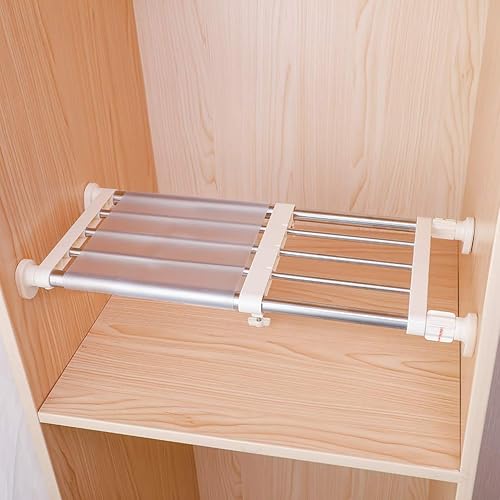
If your closet is narrow or unusually shaped, look at adjustable shelving rather than fixed units. For tight spaces, the approach in Small Closet Organization: Shelving, Over-Door Storage and Hangers shows how to combine these pieces without blocking access.
Work Through the Setup Step by Step
- Install the shelf units and rods first, checking level with a torpedo level.
- Anchor tall shelving to wall studs. Wall anchors alone may not hold a loaded unit.
- Place bins and shoe racks in their zones.
- Hang clothes by category, sorted by sleeve length or color.
- Label bins on the front edge so the contents are visible without opening them.
- Add over-door storage or a hamper if floor space is limited.
- Take a photo of the finished closet to remember where things go.
Keep the System Working
A new closet drifts back to clutter within weeks if nothing has a fixed home. Schedule a quick reset every season, when you rotate clothing and check which bins have grown too full. Our guide to Small Closet Organization Tips: 8 Steps for a Tidier Space covers routines that keep small spaces manageable.
Common Mistakes
- Buying bins before measuring the shelf depth, which leaves them overhanging.
- Overfilling shelves so items cannot be removed without disturbing the stack.
- Skipping wall anchors on tall units, which can tip when loaded.
- Storing seasonal clothing in the prime eye-level zone.
- Ignoring the door and back wall, which often have usable space.
Recommended Gear
- Clear stackable bins: These let you see accessories and folded sweaters without unpacking the bin. View on Amazon
- Velvet non-slip hangers: Their grip keeps garments from sliding off the rod and saves space on crowded rods. View on Amazon
- Over-door shoe organizer: A hanging pocket organizer uses the back of the door for shoes or accessories. View on Amazon
FAQ
How much shelf depth do I need for closet bins?
Measure the depth of your shelf and choose bins that are slightly shallower so they sit flat without overhanging. A gap of about a finger’s width on each side keeps the shelf easy to clean.
Should I use a shelving system or a closet organizer kit?
Kits are fast to install and suit standard closets. Custom or modular shelving works better for unusual dimensions or when you need more control over rod height.
Do I need to check store hours or availability before going?
Yes. Check the official website for current store hours, in-stock items and any pickup or delivery options before you visit, since these details change.
Conclusion
A closet organization container store trip goes smoothly when you sort, measure and zone the space first. Choose containers that fit your shelves, anchor tall units, and reset the closet each season. With a clear plan, the closet stays usable long after the bins go in.
Related reading
- Dollar Store Closet Organization: 7 Steps to a Tidier Closet on a Budget
- Board Game Closet Organization: 7 Steps to Store Every Box
- Pantry Organization Container Store: 7 Steps to a Tidy, Usable Pantry
- Wire Shelf Closet Organization: 7 Steps to Use Every Inch
Ready to choose one?
About Colin Foster
Colin Foster is part of our editorial team and reviews and edits our home organization guides, checking product details against manufacturer specifications and owner feedback.