By Colin Foster
Updated November 2026
IKEA closet organization hacks work because the system is modular: you can add rails, shelves, drawers and bins in the exact spots you need. With a few changes to height, zoning and storage containers, most reach-in closets can hold noticeably more while staying easy to search. The steps below show how to plan the layout, adjust the hardware and keep everything in place.
Start by Mapping How You Actually Use the Closet
Before you buy anything, sort your clothes into three groups: daily wear, weekly wear and off-season items. Put daily clothes at eye level and shoulder height, weekly items above or below, and off-season pieces on the highest shelf or in bins. This single step prevents the most common IKEA closet problem, which is a well-stocked system where everything is hard to reach.
Shopping for one? See our guide: 5 Best Yamazaki Home Magnetic Kitchen Organization Racks Compared (2026).
Use Vertical Space With Double Hanging Rails
Most standard closets have one rail at about 66 to 70 inches from the floor, which leaves a large dead zone underneath. Adding a second rail, typically set about 40 inches from the floor for shirts and blouses, roughly doubles hanging capacity for short garments. Keep long items like dresses and coats on the upper rail and folded or short items below. Measure your clearance first so the lower rail sits at a comfortable height.
Make Drawers and Bins Work Harder
Zone your drawers
Use small dividers or shallow bins inside each drawer so socks, underwear and folded tops never mix. Keep drawer depth in mind: deep bins waste the front-to-back space, so choose a height that lets you see the contents at a glance.
Label everything
Clear bins or simple labels let you find items without pulling out every container. Label by category, not by season, so the system still works when the weather changes.
Plan the Shelves and Over-Door Storage
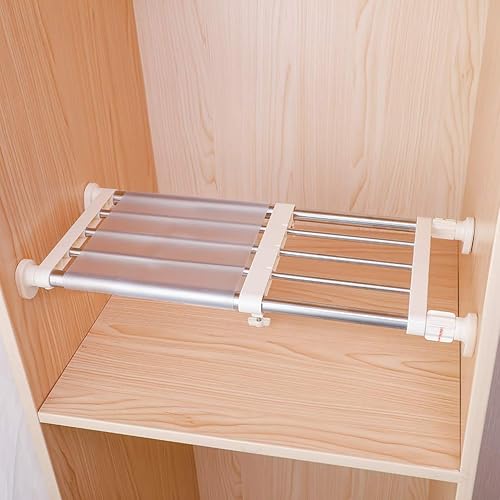
Shelves are most useful when they are spaced to fit the things you store. Set shelves about 12 inches apart for folded sweaters and about 8 to 10 inches for shoe boxes or small bins. Over-door racks handle accessories like belts, scarves and hats, and they free up shelf space for bulkier items.
Checklist: What You Need Before You Start
- A tape measure and a notepad with your closet’s width, depth and ceiling height
- A list of what you own, sorted into daily, weekly and seasonal groups
- A level and a stud finder for mounting rails and shelves securely
- Bins, dividers and labels sized to your drawers and shelves
- A plan for donating or removing anything you no longer use
Common Mistakes to Avoid
- Setting the lower rail too high, which leaves little room under hanging clothes
- Buying bins before measuring, so they do not fit the shelf depth
- Filling every inch, which makes the closet harder to close and search
- Skipping the sort step, so daily clothes end up on high shelves
- Mounting hardware without checking for studs, which can lead to sagging shelves
Recommended Gear
- Clear stackable bins: Clear sides let you see contents without opening each one, which speeds up daily use. View on Amazon
- Drawer dividers: Adjustable dividers keep small items sorted and prevent piles from forming. View on Amazon
- Over-door storage rack: A hanging rack adds pockets for accessories and frees up shelf space. View on Amazon
FAQ
Do I need a second rail if my closet is small?
Often yes. A second rail is one of the fastest ways to add capacity in a narrow closet, as long as you measure the clearance so it does not crowd your clothes.
How do I hang shelves or rails safely?
Find studs with a stud finder and anchor into them when possible. If you must use drywall anchors, check the weight rating and consult a professional for heavy loads.
What should I do with items I rarely use?
Store off-season clothes and seldom-used items in the highest shelves or in labeled bins. If you have not used something in a year, consider donating it to free up space.
Conclusion
Good IKEA closet organization comes down to measuring, sorting and choosing the right height for each zone. Start with the layout, then add rails, drawers and bins where they make everyday use easier. For related layouts, see Organization Hacks for Closet: 7 Smart Ways to Gain Real Space and Closet Organization Systems IKEA: 7 Steps to a Tidy, Functional Closet.
Related reading
Ready to choose one?
About Colin Foster
Colin Foster is part of our editorial team and reviews and edits our home organization guides, checking product details against manufacturer specifications and owner feedback.