By Colin Foster
Updated November 2026
Small entry closet organization comes down to three things: keep only what you use at the door, give every item a fixed home, and make the most of vertical space. Work through the steps below and you will end up with a closet where coats hang in one zone, shoes sit in another, and bags and keys have a spot that is always ready. Most small entry closets can be set up in an afternoon.
Step 1: Empty the Closet and Sort Everything
Pull out every coat, bag, shoe, umbrella and sports item. Sort them into piles: daily use, seasonal, and things that do not belong in the entry at all. Be ruthless with the last pile. Anything that is damaged, outgrown or rarely used should leave the closet, even if it is only moved to a storage area elsewhere.
Shopping for one? See our guide: 5 Best Yamazaki Home Magnetic Kitchen Organization Racks Compared (2026).
Step 2: Measure and Zone the Space
Measure the interior width, depth and height, plus the clearance under the door for any over-door hooks. A typical reach-in entry closet is about 24 inches deep, which is enough for a single hanging rod with shelving above. Divide the space into zones:
- Hanging zone: coats and jackets, on a rod roughly 60 to 66 inches off the floor.
- Shelf zone: hats, gloves, scarves and keys, on a shelf directly above the rod.
- Floor zone: shoes and boots, on a low tray or rack at the base.
Step 3: Add Vertical Storage
Install a second rod or shelf
If your closet is tall, a double-hang setup doubles your hanging capacity. Mount a short rod about 40 inches from the floor for children’s coats or everyday jackets, and keep the full-length rod above it for adult coats.
Use over-door and wall space
The back of the door and the side walls are often unused. Over-door hooks or a narrow shoe organizer can hold bags, scarves and winter accessories without taking up floor space.
Step 4: Set Up a Shoe System
Shoes are the main source of clutter in most entry closets. Use a slim tiered shoe rack for four to six pairs, or a shallow tray that catches wet boots. Keep the shoes you wear most in front and store off-season pairs elsewhere. A rack set at least 10 inches deep keeps heels from tipping over.
Step 5: Create a Drop Zone for Daily Items
Keys, mail, wallets and phone chargers should have one home. A small basket or wall-mounted tray on the top shelf works well. The rule is simple: when you come in, things go in that spot, not on the floor or the counter.
Step 6: Label and Check Your Layout
Labels help everyone in the house put things back in the right place, especially children. Use clear bins with simple labels for hats, gloves and seasonal items. Hang the items you use most at the front of the rod so you do not have to dig. You may also like Small Hallway Closet Organization: 7 Steps to a Clutter-Free Setup.
Step 7: Schedule a Quick Monthly Reset
Once a month, take ten minutes to remove anything that has drifted in, check that shoes are paired, and rehang coats. This keeps the system working. If you are also organizing other small spaces, the Small Closet Organization Tips: 8 Steps for a Tidier Space guide covers similar routines, and Very Small Closet Organization Ideas: 8 Layouts That Add Real Space shows layouts for even tighter footprints.
Common Mistakes to Avoid
- Storing off-season items in the entry. They crowd out daily gear.
- Hanging a rod too high for children, which turns the closet into a place they cannot use.
- Buying deep shelving that wastes space in a shallow closet.
- Skipping the sort step and organizing items you will never use.
- Leaving the drop zone unassigned, so keys and mail end up everywhere.
Recommended Gear
A tiered shoe rack that fits under a hanging rod keeps footwear off the floor without eating into hanging space. View on Amazon
Over-door hooks with multiple arms give you a place for bags, scarves and hats on the back of the door. View on Amazon
Clear stackable bins with lids make it easy to see seasonal items on a top shelf and keep dust off them. View on Amazon
FAQ
How deep should a small entry closet be for hanging coats?
A depth of about 24 inches is usually enough for a single rod with a standard coat. Hangers need roughly 12 to 14 inches of clearance from the back wall to the front of the closet opening, so measure before buying hardware.
Where should I put shoes in a small entry closet?
Place shoes on a low rack or tray at the base of the closet, in front of the hanging area. Keep the pairs you wear most closest to the door.
Can I organize an entry closet without drilling holes?
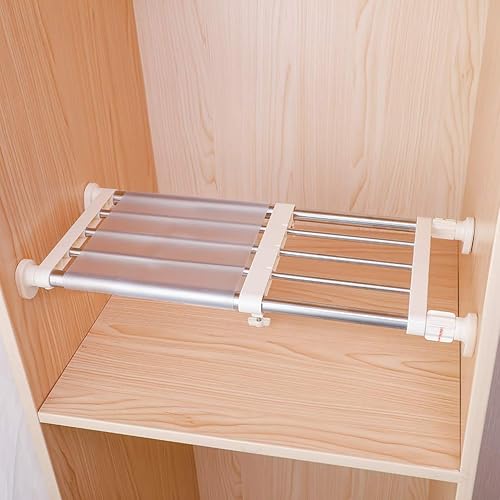
Yes. Over-door hooks, freestanding shoe racks and tension-mounted shelves all work without drilling. Check whether your rental agreement allows any wall mounting first.
Conclusion
A small entry closet works best when it has zones for hanging, shelving and footwear, plus a fixed spot for daily items. Sort first, add vertical storage, and reset the space once a month. With those habits in place, your entryway stays clear without much effort.
Related reading
- Small Closet Organization: Shelving, Over-Door Storage and Hangers
- Organization Ideas for a Small Closet: 8 Setups That Actually Work
- Dorm Closet Organization Ideas: 7 Setups That Fit a Small Space
Ready to choose one?
About Colin Foster
Colin Foster is part of our editorial team and reviews and edits our home organization guides, checking product details against manufacturer specifications and owner feedback.