By Colin Foster
Updated November 2026
Tiny closet organization ideas work best when you start with what the space actually needs to hold. This guide walks you through measuring your closet, sorting what goes in it, and setting up vertical storage, hanging rods and shelving so you can see everything at a glance. Most small closets can gain noticeable usable space with a few well-placed changes and no construction.
Measure and Empty the Closet First
Before buying anything, take the contents out and measure. Record the width, depth and height of the interior, the height from the floor to the rod, and the distance from the rod to the shelf above it. Many standard closets have a rod set around 66 to 72 inches off the floor, which leaves a shelf zone of only a few inches above it.
Shopping for one? See our guide: 5 Best Yamazaki Home Magnetic Kitchen Organization Racks Compared (2026).
Sort everything into three piles: keep, relocate and donate. Anything you have not worn or used in the past year is a strong candidate for donation. Once the closet is empty, wipe down the shelves and floor so you are working with a clean surface.
Use Vertical Space Above and Below the Rod
Tiny closets rarely run out of height, they run out of usable height. Add a second hanging rod below the first to double the hanging capacity for shirts, pants and skirts. A short rod mounted about 40 inches from the floor works well for folded-over pants or shorter garments.
Use the space above the top shelf too. Stackable shelf dividers, deep bins that slide onto the shelf, and a few open baskets keep items off the floor without hiding them. Label each bin on the front edge so you can identify contents without pulling it out.
Choose Layouts for Your Closet Type
A closet with a single rod and one shelf needs different solutions than a reach-in with double doors and drawers. For a single-rod closet, a shelf-and-rod combo with a second rod is usually the best use of space. For closets with a door, a back-of-door organizer with pockets can hold shoes, belts, scarves and accessories without taking any floor space.
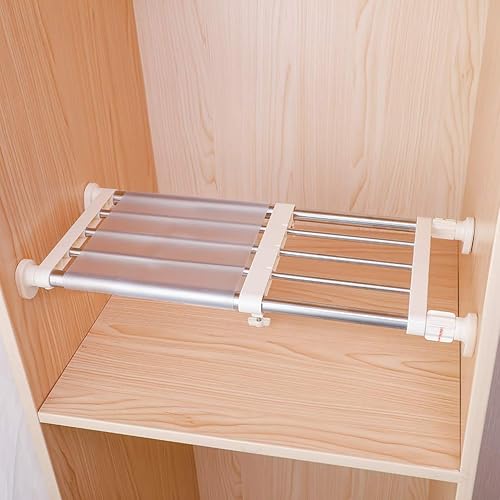
If your closet is narrow and deep, consider a slim rolling cart or a tension-mounted shelf system that fills the gap beside the rod. For more layout options at different sizes, see Very Small Closet Organization Ideas: 8 Layouts That Add Real Space and Organization Ideas for a Small Closet: 8 Setups That Actually Work.
Organize Contents by Category and Frequency
Group like with like: all short-sleeve shirts together, all pants together, all outerwear in one zone. Then place the most-used items at eye level and the least-used items on the top shelf or in the deepest bin. This keeps your daily grab items easy to reach and stops rarely used items from crowding the front.
For clothes, fold knits and store them on shelves. Hang structured items like jackets and button-downs. Keep hangers uniform, since matching hangers make it easier to see gaps and spot what needs to go. If you want more background, see Closet Organization Hanging Shelves: 7 Steps to Add Real Storage.
Quick Setup Checklist
- Measure width, depth, rod height and shelf clearance.
- Sort contents into keep, relocate and donate piles.
- Clean shelves and floor before reinstalling anything.
- Add a second rod or hanging organizer for extra capacity.
- Install shelf dividers or bins to contain small items.
- Group by category and place frequently used items at eye level.
- Label bins and shelves on the front edge.
Common Mistakes to Avoid
- Buying bins before measuring. Oversized bins eat the space you were trying to free up.
- Stacking too high. Anything above the top of a standard shelf or bin tends to get ignored.
- Keeping clothes you no longer wear. A tiny closet works best when it holds only what you use.
- Ignoring the floor. Shoes and bags left on the floor reduce usable space quickly, so use a shoe rack or door-mounted organizer.
- Skipping maintenance. Reset the closet every few months, since clutter returns quickly in small spaces.
Recommended Gear
A door-mounted organizer with pockets holds shoes, accessories and folded items without using any floor or shelf space. View on Amazon
Stackable closet shelf dividers keep folded sweaters and jeans from sliding and falling over, which keeps stacks tidy. View on Amazon
A second hanging rod that mounts beneath the main rod doubles your hanging capacity in a single step. View on Amazon
FAQ
How do I organize a closet that has no shelves?
Add a tension-mounted shelf unit or a hanging organizer with fabric cubbies. These give you storage for folded items without drilling into walls.
What is the best way to store shoes in a tiny closet?
Use a door-mounted or hanging shoe organizer, which keeps pairs off the floor and visible. Store off-season shoes in labeled boxes on a high shelf.
How often should I declutter a small closet?
A quick review every three to six months keeps things manageable. Each time, remove anything you have not worn or used since the last check.
Conclusion
Tiny closet organization ideas come down to measuring first, using height and doors, and grouping items by use. Start with the layout that fits your closet type, then keep only what you use. A small, well-planned closet can feel far more spacious than one twice its size.
Related reading
Ready to choose one?
About Colin Foster
Colin Foster is part of our editorial team and reviews and edits our home organization guides, checking product details against manufacturer specifications and owner feedback.