 By Claire Whitaker
Updated November 2026
Small bathroom closet organization comes down to three things: removing what you don’t use, grouping what’s left by how you use it, and putting each group in a container or spot sized for it. Finish these steps and you’ll be able to find any item in under 30 seconds, and the closet will stay tidy without constant effort.
Step 1: Empty the closet and sort by category
Pull everything out, including items stored on the floor or behind the door. Sort into piles: towels, toilet paper and backup supplies, medicine and first aid, hair tools, skincare and cosmetics, cleaning supplies, and everything else. Seeing the full volume in each category shows you how much space each one needs.
Shopping for one? See our guide: 5 Best Yamazaki Home Magnetic Kitchen Organization Racks Compared (2026).
Step 2: Cut what you don’t need
Check expiration dates on medications and personal care products, and toss anything dried out or past its use. Donate unused hotel-size toiletries you won’t realistically use, duplicate hair tools, and towels with worn edges. Keep one spare of each everyday item and no more, unless you have the room to store backups without crowding.
Step 3: Assign zones by height and frequency
Put daily-use items at eye level and in the front. Store items you reach for weekly on the middle shelves, and move rarely used backups to the top shelf or the back of a lower shelf. Heavy items such as bottled cleaners belong low, where they’re safer to lift. A simple layout looks like this:
| Shelf height | Best for |
|---|---|
| Eye level | Daily items: toothbrushes, face wash, medication you take regularly |
| Middle shelves | Weekly items: hair tools, extra toiletries, first aid |
| Lower shelves | Heavy or bulky items: cleaners, bulk paper goods |
| Top shelf | Backup stock and seasonal items you use rarely |
Step 4: Use vertical space and the door
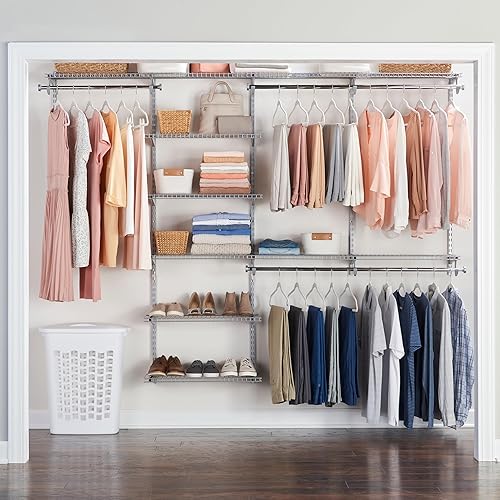
Most small bathroom closets have more usable height than floor space. Add a shelf or tension rod to create a second level, and mount an over-the-door rack with narrow pockets on the inside of the door. Hooks on the side wall can hold hair dryers, robes or bags, and a slim rolling cart can fit into a gap beside the shelving.
Step 5: Contain small items
Loose small items are the main reason small closets feel chaotic. Use shallow bins or trays for cotton pads, razors, nail tools and hair ties. Clear containers let you see contents at a glance, and labeling the front of each bin means anyone in the house can put things back correctly. Keep containers no deeper than the item they hold, so nothing gets buried.
Step 6: Group towels and linens with a fixed spot
Fold towels in thirds so the stack is about 12 inches wide, which fits most shelf depths. Stand them on edge so each one is visible, rather than stacking them flat where the bottom ones get forgotten. Keep spare toilet paper rolls in one bin so they don’t spread across the shelves.
Step 7: Set a 10-minute reset habit
Once a week, take ten minutes to return items to their zones, check for expired products and restock backups. This keeps the system working without a full overhaul every few months. Men's Small Closet Organization: 7 Steps to Fit Everything Neatly goes further into this.
Common mistakes
- Buying bins before you’ve sorted and decluttered, which leads to buying the wrong sizes.
- Leaving the top shelf empty and crowding the lower ones, instead of using every level.
- Storing medications near heat or humidity, such as above a shower; keep them in a cool, dry spot.
- Choosing deep containers that hide small items at the back.
- Skipping labels, so items drift back to the wrong place within a few weeks.
Recommended gear
- Clear stackable bins: Let you see small items at a glance and stack to use height. View on Amazon
- Over-the-door organizer with clear pockets: Adds storage to the back of the door without drilling. View on Amazon
- Adjustable tension rod: Creates a second shelf or hanging space in a narrow closet. View on Amazon
FAQ
What is the best way to start small bathroom closet organization?
Empty the entire closet first, then sort items into categories before you buy any containers. This shows you how much space each category really needs. Worth reading next: Bathroom Closet Organization System: 6 Steps to a Tidy Space.
How do I store medications safely in a bathroom closet?
Keep them in a cool, dry location away from direct heat and steam, and out of reach of children. Check expiration dates regularly, and consult a pharmacist or doctor about storage guidance for specific medications.
How often should I reorganize a small bathroom closet?
A quick reset once a week keeps things in order, and a full review every few months helps you catch expired products and unused items.
Conclusion
Small bathroom closet organization works best when you clear out first, then build zones around how often you use each item. Vertical space, small-item containers and a short weekly reset will keep the closet functional. Start with the empty-and-sort step today, and the rest will follow more easily.
Related reading
- Very Small Closet Organization Ideas: 8 Layouts That Add Real Space
- Small Walk-In Closet Organization: 7 Steps to Use Every Inch
- Small Walk-In Closet Organization Ideas: 7 Layouts That Add Usable Space
- Small Entry Closet Organization: 7 Steps to a Clutter-Free Entryway
Ready to choose one?
About Claire Whitaker
Claire Whitaker is part of our editorial team and reviews and edits our home organization guides, checking product details against manufacturer specifications and owner feedback.