By Colin Foster
Updated November 2026
Bi-fold door closet organization is mostly about working around the door itself. The doors take up space on the inside of the opening, they limit how far you can reach, and they often hide a closet that looks bigger than it is. This guide walks through a layout that uses the full depth and height of the closet, keeps everyday items within reach, and makes sure the doors still close without catching on anything.
Measure the Opening and the Door Swing
Start with measurements, because bi-fold doors change what fits. Measure the width of the opening, the height from the floor to the top of the frame, and the depth from the back wall to the front of the frame. Then open the doors and measure how far each panel projects into the closet. Many bi-fold panels are about 2 to 3 inches thick, and the folded panels can stick out an extra inch or more depending on the track and hardware. Subtract that projection from your depth measurement. The space left is what your shelves and rods can use.
Shopping for one? See our guide: 5 Best Yamazaki Home Magnetic Kitchen Organization Racks Compared (2026).
Plan Zones Based on How You Open the Doors
Bi-fold doors make the front edge of the closet hard to reach when they are open, so put the things you use daily on the inside walls and the center of the closet, and save the door-side space for items you grab less often. Divide the closet into three zones: If you want more background, see Two Door Closet Organization: 7 Steps to Use Every Inch.
- Eye-level and reach zone (roughly 40 to 72 inches off the floor): daily clothing, bags and frequently used boxes.
- Overhead zone (above 72 inches): seasonal bins, spare bedding and anything light you use once in a while.
- Floor zone (under 24 inches): shoes, baskets and sturdy storage bins that can slide out.
Install a Shelf and Rod System That Clears the Doors
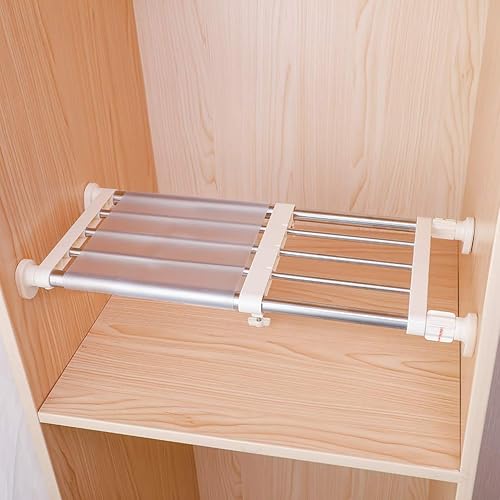
Hang the closet rod so it sits clear of the folded panels. A common approach is to place the rod about 12 to 14 inches back from the door opening, which leaves room for the doors to fold without hitting hanging clothes. If you need a second rod for shorter items like shirts, mount it below the first one and keep the total stack at a height you can reach. Add one or two fixed shelves above the upper rod for folded items. Keep shelf depth to 12 inches or less so the doors can close fully.
Checklist for installation
- Locate wall studs and mark the rod and shelf positions with a level.
- Confirm each bracket’s rated load before loading it with heavy bins.
- Test-open and close the doors after the first shelf goes up.
- Check that the door pivot hardware still moves freely.
Use Door-Side Storage for Small Items
The back of a bi-fold panel is a useful storage surface. Over-the-door hooks, slim pocket organizers and shoe racks mounted to the inside of the panel take advantage of space the door already occupies. Keep anything on the door light enough that the panel does not sag, and avoid hanging items that will bump the frame when the doors close. Rotate heavier items off the door and into the closet interior if the panel shows any strain.
Store Bins and Baskets at the Right Depth
Pick bins that fit the depth you measured, not the full depth of the closet. A 10 to 12 inch deep bin fits easily behind a folded panel and leaves room to pull it forward. Clear bins let you see contents without opening every container, and labels on the front make the system easy to maintain. Keep the heaviest bins on the floor zone so you are not lifting them overhead.
Common mistakes
- Installing shelves deeper than the door projection, which stops the doors from closing.
- Hanging the rod too close to the opening, so clothes catch on the folded panels.
- Putting daily items on the top shelf where they are hard to reach.
- Overloading the door-side hooks until the panel sags or binds in its track.
- Skipping a test of the doors after each change, which hides a problem until it becomes a bigger repair.
Recommended gear
A few supplies make bi-fold door closet organization easier to set up and keep tidy. For a deeper look, T-Shirt Organization in Closet: 7 Steps to Stack, Fold and Find Every Tee covers this in detail.
- Over-the-door organizer with pockets: a useful way to store small accessories on the back of a panel without adding screws. View on Amazon
- Clear stackable storage bins: they fit the shallow zones behind folded doors and show contents at a glance. View on Amazon
- Adjustable closet rod bracket set: lets you set the rod height to match the zones you planned and clear the door swing. View on Amazon
FAQ
How deep should shelves be in a bi-fold closet?
Keep shelves to 12 inches deep or less, and subtract the door projection from your measurement first. This leaves room for the panels to fold without hitting the shelf edges.
Can I hang a rod directly against the bi-fold doors?
It is better to place the rod about 12 to 14 inches back from the opening. That spacing keeps hanging clothes clear of the folded panels so they do not snag.
What if the bi-fold doors sag after I add hooks?
Remove the heaviest items and redistribute the load. If the panel still sags or binds, check the hinge and track hardware, and consult a professional installer or a door repair specialist for structural fixes.
Conclusion
Good bi-fold door closet organization starts with measuring the door projection and planning zones around how you open the doors. Set the rod and shelves to clear the swing, use the door back for light items, and keep bins at a depth that fits. Test the doors after every change so the closet stays easy to use. For more layouts, see Small Closet Organization: Shelving, Over-Door Storage and Hangers and Reach In Closet Organization: 7 Steps to Use Every Inch.
Related reading
- Walkin Closet Organization Ideas: 7 Layouts That Use Every Foot
- Walk In Closet Organization Ideas: 7 Layouts That Use Every Foot
- Very Small Closet Organization Ideas: 8 Layouts That Add Real Space
Ready to choose one?
About Colin Foster
Colin Foster is part of our editorial team and reviews and edits our home organization guides, checking product details against manufacturer specifications and owner feedback.