By Colin Foster
Updated November 2026
Budget friendly closet organization comes down to three things: removing what you don’t use, assigning every category a home, and spending money only on the storage that solves a specific problem. Work through the steps below and you’ll end up with a closet that’s easier to use, with clear zones and visible contents, without buying a complete system. For a deeper look, Closet Organization Container Store: 7 Steps to a Tidier Closet covers this in detail.
Step 1: Empty and Sort Before You Buy Anything
Take everything out. It feels like extra work, but it’s the only way to see what you actually own and how much space each category needs. Sort items into keep, donate, sell, and trash piles. Be strict with clothing you haven’t worn in a year and with duplicates.
Shopping for one? See our guide: 3 Best Small Linen Closet Organization Bins for Tight Spaces (2026).
Step 2: Zone the Closet by Category
Group like items together: long hanging clothes, short hanging clothes, folded knits, shoes, bags, and seasonal items. Put the things you use daily at eye level and within reach. Store off-season items on the top shelf or in the back. Zoning first tells you exactly what storage you need, so you won’t overbuy.
Step 3: Use the Space You Already Have
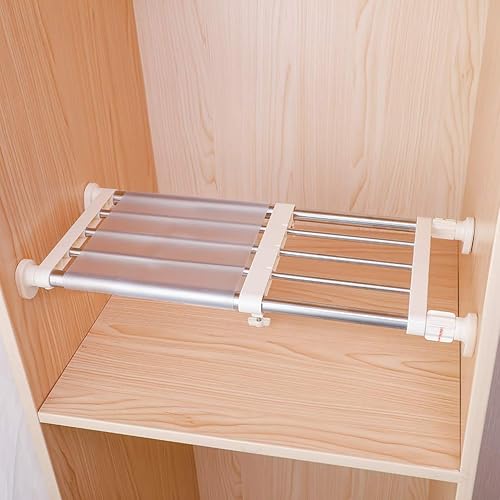
Most closets waste vertical space. Before you buy anything, check the following:
- Measure the height from the floor to the shelf and the distance between shelf and rod. A second rod added under an existing one doubles hanging space for shirts and pants.
- Look at the back of the door. Over-the-door hooks and pocket organizers hold shoes, belts, or accessories.
- Check the gap above the top shelf. Stackable bins or a few shallow boxes fit there.
Step 4: Choose Low-Cost Storage That Fits Your Zones
Once your zones are set, add only what each zone needs. A few options that work well on a budget:
- Uniform hangers: Matching hangers make the rod look orderly and help you see gaps at a glance. Slim velvet or thin plastic options take up less rod space than bulky ones.
- Fabric or wire bins: Use these for sweaters, socks, and accessories. Label the front with a strip of tape or a tag so you can find things without digging.
- Wire or plastic shelf dividers: These keep stacks of folded clothing from sliding and tipping.
- Shoe shelves or stackers: Stepped shelves give each pair its own visible spot and cost less than a full cabinet.
If you need a wider shelf or a built-in look, see Closet Organization Ideas IKEA: 6 Setups That Work on a Budget for layouts that use inexpensive modular parts. Shelving ideas for tight spaces appear in Small Closet Organization: Shelving, Over-Door Storage and Hangers.
Step 5: Label and Set a Maintenance Routine
Labels turn a nice-looking closet into a usable one. Use simple tags or tape on bin fronts and shelf edges. Then set a 10-minute reset once a month: return items to their zones, remove anything that migrated, and check for new clutter.
Step 6: Adapt the Plan for Your Closet Type
A reach-in bedroom closet, a hallway closet, and a utility closet each need different zones. Specialized guides can help you adjust the steps. For example, Small Hallway Closet Organization: 7 Steps to a Clutter-Free Setup covers entry-area storage, while Shoe Organization in Small Closet: 7 Steps to Fit More Pairs focuses on footwear.
Step 7: Check Your Results After 30 Days
Notice what you reach for and what you ignore. If a bin always ends up half empty, move it or remove it. If you keep piling items on a shelf, that zone needs more structure, not more stuff.
Common Mistakes to Avoid
- Buying storage before you sort and measure.
- Using bins that are too deep, so items get lost at the back.
- Storing off-season clothes at eye level, where they block daily essentials.
- Skipping the donate pile and cramming back everything you didn’t need.
- Overfilling hangers, which stretches rods and wrinkles clothing.
Recommended Gear
- Matching slim hangers: Uniform hangers make it easy to see what you have and free up rod space. View on Amazon
- Fabric storage bins: They hold sweaters and accessories without the bulk of solid containers. View on Amazon
- Stackable shoe shelf: A tiered shelf gives each pair its own visible spot on the floor. View on Amazon
FAQ
What is the cheapest way to start closet organization?
Start by emptying the closet and removing items you don’t use. Sorting costs nothing and shows you exactly what storage you actually need.
Do I need to buy a closet system to get organized?
No. Many closets can be improved with uniform hangers, a second rod, bins, and labels. A full system is useful only if your current layout cannot be adapted.
How often should I reorganize my closet?
A quick monthly reset is usually enough to keep things tidy. Do a full sort once or twice a year, typically at the start of each season.
Conclusion
Budget friendly closet organization starts with sorting and zoning, not shopping. Use the space you already have, add only the storage each zone needs, and label everything. A short monthly reset keeps the system working.
Related reading
Ready to choose one?
About Colin Foster
Colin Foster is part of our editorial team and reviews and edits our home organization guides, checking product details against manufacturer specifications and owner feedback.